I recently picked up my camera again, and was startled to realize how ridiculously similar photography and research (at least in computer science) are. I strongly recommend that fellow academic laborers give photography a try, or that photographers give research a try (?).
Starting with Innovation
The first thing to stress is innovation. The ways photography innovates are just uncannily like research.
The creations we take for granted today, if placed under the wheel of history, would at once reveal their greatness.
Subject and Era
Simply put, choosing a subject means finding something nobody in history has actually photographed before. Before Duchamp’s urinal (Fountain) became art, who would have thought that thing could be art?!
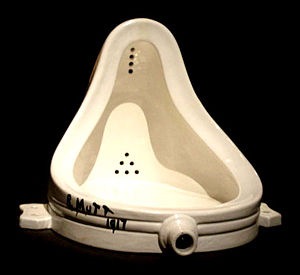
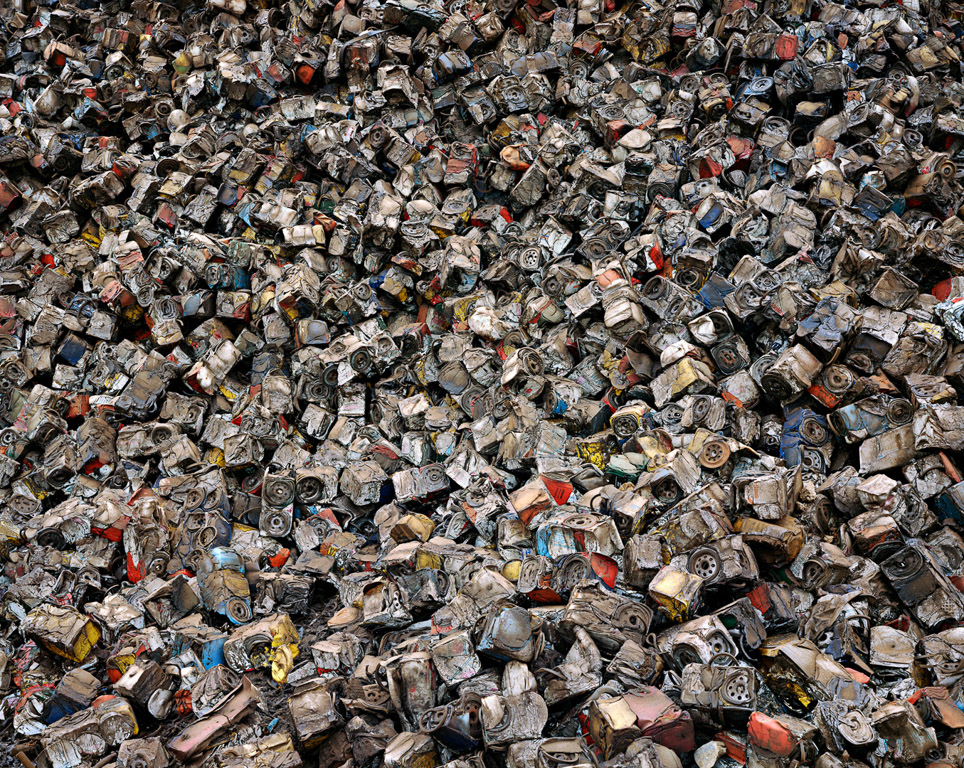
What makes a photographer a photographer largely comes down to some breakthrough in subject matter, and that breakthrough is often a product of its time. The rise of industrial civilization, and of industrial ruins, is what made Edward Burtynsky’s work possible. In research, too, a lot of work follows the times. The current craze around Large Language Models has once again sparked discussion about AI’s security, ethics, and social impact. Changing times make some works possible, and make some works timeless.
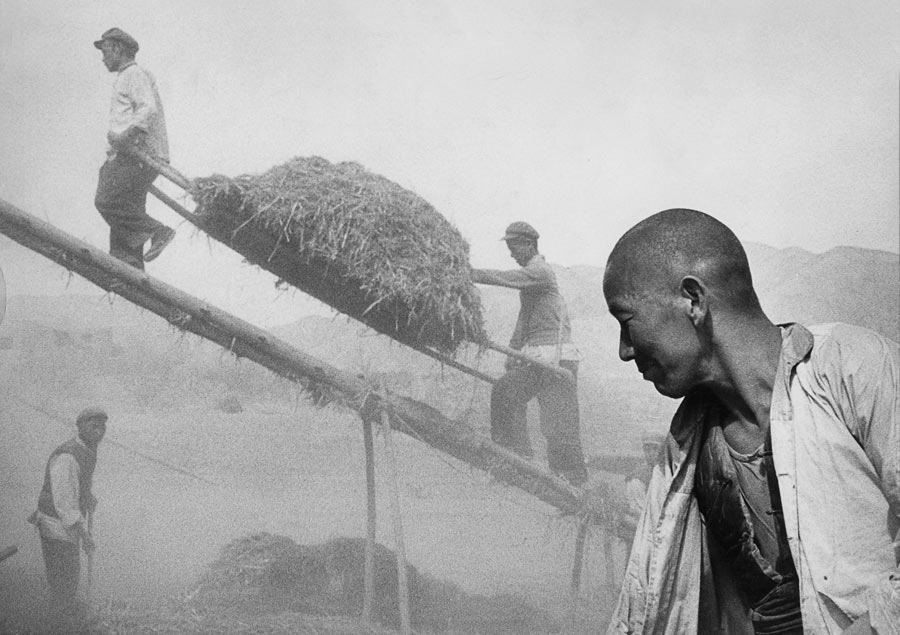
I really like that some security conferences have an award called the “Test of Time Award”. The point is that a paper may not have gotten much attention when it came out, but as times change, its value gets discovered. Something similar happens in photography. It doesn’t come as an award, but every photo taken in the present becomes history the very next second. That’s why many photographers’ pictures carry not just aesthetic value but historical research value too. Last century, when China was still very underdeveloped, few people in the country owned a camera or could afford expensive film. Many photographers who visited China back then, like Marc Riboud, left behind a wealth of precious images of the country and its people. And when these photos, or papers, long buried in history, are dug up again, they can still give us new inspiration.
Technology-Driven
Obviously, unlike many traditional art forms whose tools and techniques have barely changed, photographic technology has iterated at breakneck speed over the past century or so. The brush, ink, paper, and inkstone of Chinese painting don’t seem fundamentally different from ancient times, and the evolution of canvas and pigments for oil (and tempera) painting over several centuries has been, frankly, glacial.
But photography is different. And so is research.
When the daguerreotype was first invented, it was hard to imagine photography becoming an art form, and the range of possible subjects was severely limited. On one hand you had enormous, complicated equipment; on the other, exposures that could easily run half an hour. These constraints made the barrier to entry very high and restricted subjects to still life. It reminds me of early computers, where people had to plug wires into electrical and mechanical contraptions the size of half a room just to run one simple calculation. Inevitably, the people who got to use photography or computers in those early days were few and far between.

Then, with the invention of black-and-white film, the technical barrier to photography dropped dramatically. Same with computers, which gradually entered the era of mid-range machines and minicomputers. Lower barriers meant more and more people could get their hands on these instruments. But turning a photo into a work of art, much like turning computer use into a research result, is not so easy, and that makes the similarity between research and photography even more obvious. Admittedly, every technological breakthrough makes some new things possible, and whoever pulls off those “new things” is bound to leave their name in the history of the technology. In photography, those names belong to William Eggleston, pioneer of color photography, and Stephen Shore, who kept evolving his gear. In computer science, they belong to Fernando Corbató, pioneer of time-sharing operating systems, John Backus, pioneer of programming languages, and Alan Kay, pioneer of the graphical user interface.
A New Angle
Many academic papers apply existing techniques to new problems, while many photographs look at things from a new angle. In photography, that angle can be high or low, far or near. As a vehicle for the subjective selection and presentation of the objective world, what appears in a photo is up to the photographer. Joel Sternfeld has a body of work, American Prospects, full of the “absurd” American scenes he came across. The angle determines the composition, and it also determines how the content is presented.

In research, “angle” covers a lot too. Take security: you have to analyze and make trade-offs from angles like usability, threat model, and technique. Security is never the goal of building a system; it’s a by-product. But which security problems need solving is tightly bound to the properties of the system itself. Something that looks perfectly unremarkable from one angle may turn out to be a big problem from another. Take side channel attacks: everyone knows they can leak information. What people (once) didn’t know is that as you type letters one by one into Google’s search box, the sizes of Google’s response packets leak what you’re typing into the search engine. Now that is getting creative with a well-known attack.
The Decisive Moment
The angle I’m talking about isn’t only spatial; it can be temporal too. The decisive moment is an idea put forward by Cartier-Bresson, the heavyweight of documentary photography. So for me, as a security researcher, what is the decisive moment?

It’s finding a vulnerability, or discovering a new attack. Code and systems are constantly changing, and catching the bug in one particular version is probably security research’s decisive moment. That decisive moment may well become a CVE. Many bugs, when they surface, make you think “wait, there can be a bug here?” But after a while, you’ll probably start thinking “of course there’s a bug here!” instead (lol
Taste
For the art of photography, taste matters a lot. And in research, people also talk about “taste”.
When reviewing papers, different reviewers can have wildly different opinions of the same paper. Some care about pure novelty, some care about whether the work actually helps the real world, and some care about whether the engineering is solid. The same goes for a photographer’s work, the photo itself: different people care about different things, be it composition, color, or subject.
But I’ve found that what good photos and good papers have in common is that they “tell a story”. The way they tell it, though, is either utterly rational or deeply emotional. A well-told paper is crystal clear and lets you think along with the author, whereas the story a photo tells is the viewer’s own private reading of the work. How do you read these things? Viewers can probably just ask themselves: “What do I see?”
Eye Candy, Engineering Effort, and Academic Junk
Finally, a few words about the less glamorous stuff. In photography there’s a category of work people call “糖水” (literally “sugar water”: pretty but empty eye candy). These pictures usually have good composition, balanced colors, excellent post-processing, and, sometimes, a beautiful model. Yet they will never be the work of a “photographer”. Why? Probably because they’re just industrial saccharine, piled up out of polished surfaces. They are, more or less, soulless.
In academic output, there’s a matching category of academic junk: stuff with no insight. Unlike many harsh reviewers in the security community, I don’t think engineering effort is useless. It may sound like something “anyone could have done”, but a lot of work unavoidably needs a massive amount of engineering to prove that a simple idea actually works. A huge chunk of the time spent on a research project may well go into engineering. At the very least, this stuff is a necessary evil.
Wrapping Up
I’ve rambled quite a bit, and yet my advisor still schools me at every single meeting. Gotta keep thinking more, learning more, and doing more research photography!